A Lesson in Holding Space for Your Teen to Talk

The best thing about driving kids to countless sports practices and tournaments is time alone with each of them, especially right now. Amidst the ongoing pandemic, it is one of the few things that allows a brief sense of normalcy and offers an opportunity to support and connect with our kids in a way that they, and we, desperately need. Recently, while driving my nearly 14 year old to a lacrosse tournament, he asked if I had any earbuds in the car. Although I was unsure if he would agree, instead preferring to be alone in his own mind, I told him we could listen to whatever he wanted. He commented that his favorite rapper’s new album had “just dropped” and it would be his last since he passed away in December 2019. As he loaded the album, I was curious how Juice WRLD had died and asked my son who then shared with me a few details of what he knew of that day in the Chicago airport. ‘Juice’ was only 21 years old.

It is important to note, here, that my initial offer to my son was extended without having any idea to what my son intended to listen. Whether or not we care for our teen’s particular taste in pop culture, be it music, movies, books, haircuts, etc., if it matters to them, that is reason enough to explore and see where their head and heart currently stand. Commenting negatively when your teen shares an interest is an impediment to connection and will only deter them from sharing in the future, perhaps on more important topics, for fear of being judged and not accepted. We must challenge ourselves to express genuine curiosity, looking below the surface level of various media to find the message to which our teens are subscribing and the value they are attaching to it at this time in their lives. While there may be need for course correction, better to have that opportunity early by knowing in what direction they are heading.

Having been anxiously awaiting the album, my son explained it was mix of old and new songs and included several “collabs” (for those from my generation and older, that’s slang for collaborations with other artists). As we listened, I focused on the creative, raw lyrics. In sometimes melancholy melodies, Juice lays bare his struggles with anxiety and substance abuse, often mentioning codeine, and also expresses spirituality and periodic optimism. Yes, there is some swearing and questionable content, but mostly Juice is impressive with his use of metaphors to share his story. I commented to my son how heavy the lyrics landed and that it was sad that such an incredibly gifted and talented artist was so troubled and now gone. This acknowledgement opened a door I didn’t expect. My son began talking about how Juice’s death hit kids his age hard because he really connected with young people. Specifically, he said Juice “spoke from the heart.” It didn’t matter if Juice and my son and countless other kids had the same or different background. The connection was in the expression of powerful, genuine feelings.

As my son shared his thoughts, I was instantly grateful to have this glimpse into his teenage angst and to remind me of those years. No matter how global and broad minded we raise our kids, they are still kids, and their worlds are much more narrowly centered on their nuclear lives. I commented that Juice’s impact on youth, in life and in death, reminded me of how a lot of us felt after the deaths of Tupac and Biggie. My son nodded. Shortly after, he drifted off to sleep for much of the remainder of the ride. While he napped, one of the album interludes included someone drawing a comparison between Juice’s impact on a generation to that of Pac and Biggie. I smiled at the validation of the parallel and connected even more to my son’s deep feelings about the loss of this talented, young artist who was and is a force for his generation.

The key phrase in the last sentence is “my son’s deep feelings”. He shared something that he was not told to do or feel or think or believe, but his own feelings based on his own thoughts, and potentially influenced by his friends as they processed this loss. As parents, we can understandably find ourselves spending a lot of time teaching our kids our thoughts and beliefs in the name of right and wrong. We must also be mindful to give them space to form and experience their own reality and to hold space for them to share it with us. While they may not accept each opportunity we offer, an intentional effort to make that space available will increase our chances of truly connecting with our teens. In this case, an otherwise routine car ride turned into one of my favorite memories of my middle child’s teen life, simply because I held that space. And because I also love rap music. ; )

Check out “Legends Never Die” by Juice WRLD. It debuted at Number 1 on the charts.

Holly S. Stofa

An Open Letter to My Daughter’s Birth Mother

Hello.

I think of you from time to time, but especially on Mother’s Day. Our daughter is amazing. I am sometimes overwhelmed with gratitude for the opportunity to be her mom, without having endured carrying her in my body. You did that. Thank you for making that choice. Whatever else you may or may not do in your life, you have made the world a better place by blessing it with our girl who is full of light and love.

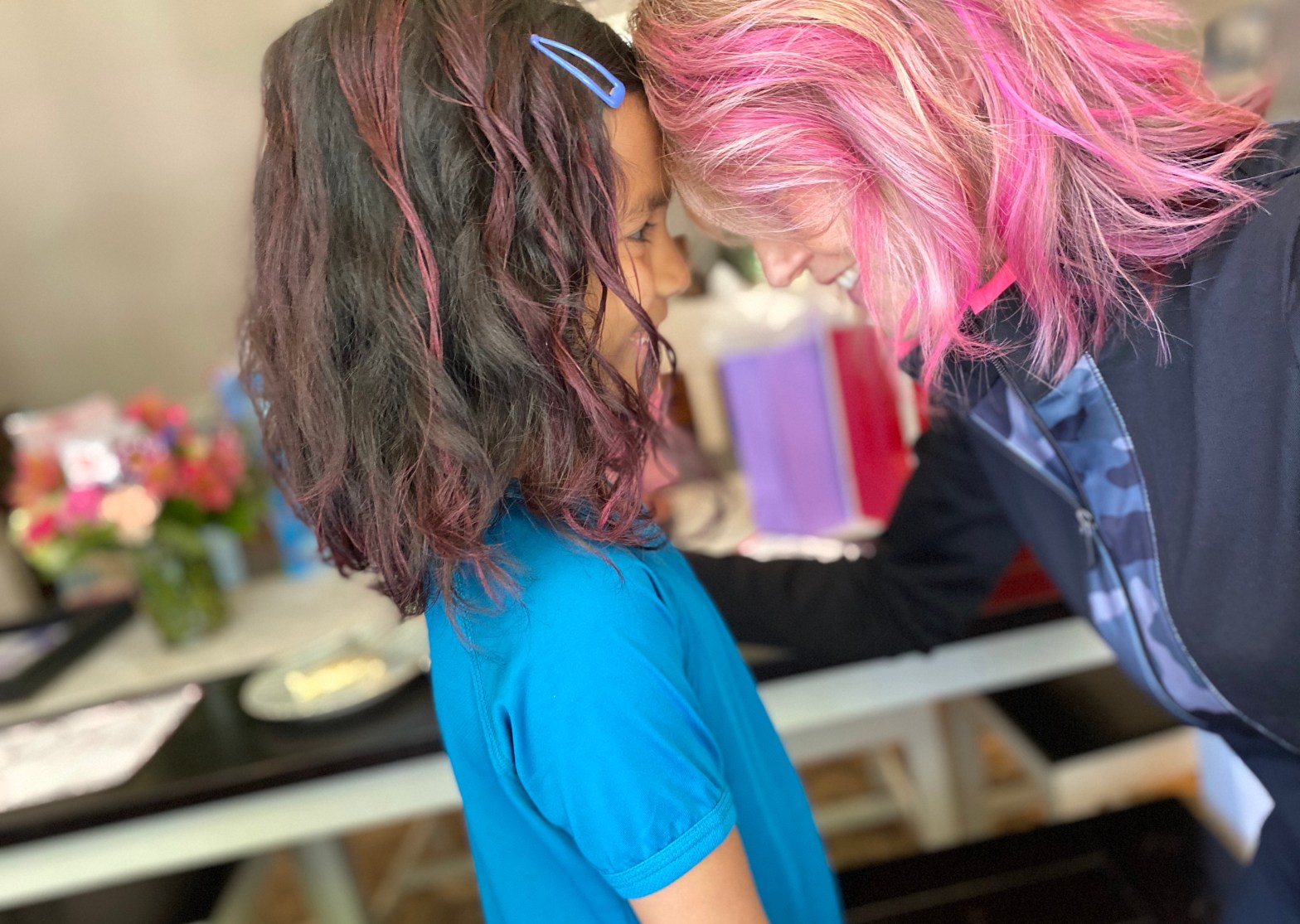
When I am struck by her beauty, I wonder what you look like. Her eyes are as dark as night and her ebony mermaid hair is gorgeous – although it generally looks like a wild mane in the morning. 🙂 I continue to learn how to deal with curly hair as it is the complete opposite of mine. You probably know how and, in time, she will too. She has a tender heart and fierce fighting spirit when she wants to achieve something. Maybe people say the same about you and I guarantee I will feed both.

Having lived in Thailand, experienced the people and culture, and gone to the place she last saw you, I feel like I understand at least the generalities of why you made the next choice, or maybe you felt you had no other choice. Either way, your love for her was evident in the care you took in ensuring she would be safe and that her entry into this world would be known. Thank you for valuing her life and for the gift of documenting her actual birth date, a luxury not afforded to many orphans and adopted children.

Perhaps there were complications. Perhaps the struggle was too great. I know not the nature of the relationship you had with her birth father; human relationships can be so complicated. But, it was you who loved her enough to give her life. Please know that I love her enough to give her a life, together with the rest of her family and friends. She exhibits many traits that amaze us in their likeness to me. She really is the combination of us both. Nature and nurture, equally important in shaping her identity.

You and I are inextricably linked as mothers to one daughter, and she to both of us. She needs only to look down at her belly button to be reminded of her connection to you and look into my eyes to feel her connection to me. You will forever be in my heart and mind and I will always speak tenderly about you to our daughter, on Mother’s Day, and any time she asks. Without you, there’s no her, there’s no us. Thank you.

Love always,

Holly

Blue Eyeliner

Sometime during the summer between finishing middle school and beginning high school, I had 12 inches of my long blonde hair cut off and started wearing make up. I don’t recall a specific conversation with my mom about allowing me to wear makeup or whether there were any rules. My mom had always been a “Cover Girl” in that she looked lovely with simple drug store cosmetics. Whether she gave me money or purchased the makeup for me, I followed suit. She says I probably did it on my own and refers to the difference between my 8th and 9th grade school pictures as transformational, from tomboy (or ugly duckling) to swan. She never actually called me ugly, but the metaphor applied.

I remember vividly the excitement of being a freshman, riding the field hockey team bus, and trying to figure out my identity. While I was struggling to develop self-confidence, as many 13 year olds do, I was full of hope. In beginning to experiment with makeup, one of my primary choices was blue eyeliner. Cobalt blue with matching mascara. I loved the way the vibrant color lit up my face. I wondered why anyone would ever choose black or brown eye makeup when there was cobalt blue. Something so simple made me feel so alive and comfortable in my own skin.

Over the years, as I changed and grew, my self-confidence was based heavily on being an athlete and I no longer associated any portion of my identity with blue eyeliner. I tried different colors and often wore the standard brown and sometimes dramatic black that most people sported. How I felt about who I was had little to do with makeup. It was now part of my daily routine and neither represented change nor required focus. I stuck with over-the-counter cosmetics, never interested in high dollar makeup, preferring to keep my extra cash for more practical and necessary things. 

Multiple decades and life changes later, while shopping for a replacement cosmetic item of some sort, I noticed blue eyeliner on the rack. I smiled, immediately remembering a different time. It sparked in me a dormant but fresh feeling of hope and transformation. I felt inspired knowing that blue eyeliner still existed and might represent a step in someone else’s journey, as might green or purple or black. How cool that today’s young people had the same choice I did, so many years ago, as they pursued their own self-discovery. I purchased whatever item had brought me to the store and left.

I later found myself contemplating why it had not crossed my mind to pick up a blue eyeliner pencil for myself. I reasoned that it was, of course, because grown women do not wear bright blue eyeliner, unless they are Lady Gaga or Katy Perry, or going out for a special occasion. Instantly, without a second to control my own thoughts, I retorted, “Says who?” I engaged in an internal debate regarding having allowed myself to become so confined to societal norms that even a makeup choice seemed bold. Ultimately, having reminded myself that I am a grown ass woman, I went back to the store and bought blue eyeliner. I felt excited to try it again, just as I had so many years earlier. Such a small act took me back to a time where I felt very much in touch with myself. Uninhibited and full of hope.

If you see me today, I will likely be wearing blue eyeliner, to work, to the store, to watch kids’ sports. I feel happy literally every time I apply this tiny element. It allows me to approach the day with hope and inspiration for what is to come and what I can achieve. Each of us has multiple small (or big) things that represent such a transformational time in our lives. I challenge you to give some thought to and consider whether you can take a step to inspire yourself by answering the question…

What is your blue eyeliner?

Holly S. Stofa

How and Why I Became a Football Mom

Looking back, I was the least likely football mom. I did not play football and it was not part of my background. Today, I find myself steadfast in defense of my sons’ pursuit of their passion. Life is meant to be lived and tomorrow is not promised. I neither deny science related to concussions, which are not limited to football, nor succumb to the overt judgement of others. Rather than trying to regulate my kids off of the football field, I suggest taking a look at the detrimental effects on kids’ brains of overuse of electronic devices which affect a significantly higher proportion of the population. I respect the freedom for each parent and family to make (or not make) one’s own choices and appreciate the same in return. Consequently, I am compelled to share my perspective, as a football mom, because I love my kids, and I love their passion for the game, which is why I let them play.

I grew up in a small town on the Eastern Shore of Maryland where my alma mater high school has claimed many State Championship titles in various sports, but fielded its last high school football team in 1985, my freshman year. With less than 500 students, the school was unable to field competitive football and boys soccer teams concurrently. Friday Night Lights meant soccer games and cheerleading was limited to basketball season. I played field hockey (for great coaches) and experienced both the thrill of winning and the agony of losing State Championships. But, the American high school football phenomenon was not present in my town.

In the early 90s, I continued my field hockey career at a Division III college where I became teammates with former high school rivals. We made it as far as the NCAA Final Four, but came up short. Our football team struggled to turn in a winning season, but I was friends with several players and attended games. After college, I coached high school field hockey for many years, including seven at a Northern Virginia high school where we practiced adjacent to the football team. Concussions were not yet at the forefront of discussions about football and I did not yet have children. Football had become part of my fall landscape alongside field hockey.

I was an average NFL fan. I played a season of co-ed flag football as a young adult and, as an athlete and natural defender, I admittedly enjoyed the thrill of breaking up a pass play, despite the pain of being bounced like a pinball, even in flag. It was not until I married a former football player that I thought any deeper about what football both demands of and gives to its participants. I believed strongly in the life lessons learned and the leadership skills developed through participation in team sports. Commitment, discipline, communication, determination, perseverance, resilience. The list goes on. My husband asserted there was something greater, different, required by football of boys who became men by playing. I posited that the overwhelming majority of even the U.S. population did not play American football, and could still become good leaders. But, my strong interest in motivation and human behavior made me curious enough to begin information gathering.

Whenever I encountered a male colleague or friend who had played football at any level, I would ask their opinion about football, what they got out of it, and whether it was superior in some way to other sports. Every man agreed. Football was different. The grid iron was the great equalizer. It brought together people of different demographics, demanded toughness, and required performance in unison to accomplish a common goal. One who was a U.S. Marine and All-American Division I lacrosse player described football as most closely aligned with the camaraderie of the military, the need to have your brother’s back and count on him to have yours. For all football participants, but I would argue particularly kids from middle class suburb families, who have never missed a meal or wanted for anything they actually needed, getting in the trenches with others, sometimes coming up short, but learning that anyone not doing their job has consequences for themselves and others, is valuable.

I knew when our two sons were little that, eventually, the topic of football would make its way into our household conversations. Their dad and both of their grandfathers played football and their great uncle even played in the NFL. Considering my sweet baby boys playing this violent game felt uncomfortable and I was thankful I had time. I agreed to their participation in flag football which allowed the boys to learn basic football concepts without the fear of being hit. But, I was relieved when we moved to Asia, delaying the topic for two more years given the unavailability of the sport abroad.

When we returned to the U.S., the boys were entering third and fourth grades. I had (maybe not so) secretly hoped the topic would fade into the background. Nonetheless, it came fast and furious as fall approached. Next thing I knew, the boys were signed up for youth tackle football and I felt anxiety like never before. We often fear that which we do not know. I actively researched the newer coaching techniques taking hold throughout youth football to reduce head to head contact. I asked questions and explored. Upon seeing their first game, I felt somewhat relieved. The other kids were small, like them. It became clear as they got older and the players got bigger that to play scared was to put one’s self and others at risk. The answer was to do it right and do it full speed. That takes focus and courage.

The more I researched, the more I could see the game was changing in order to preserve its own existence. Support and participation were waning, at the youth level. Some organizations folded while others that had been in existence for decades remained in tact, committed to sustaining their traditions. I found myself curious about the parents beside me on the field. Who were these people not judging me, but also being judged by outsiders? It was interesting to look at the demographics of who was allowing their kids to play football, and who was not. Equally interesting was considering their reasons for doing so, whether it was a parent’s dream to have their kid make it to the NFL or more tangibly to make it into a DC area private school through athletic recruitment; or choosing not to allow their son to play for fear that he, and they, would be robbed of whatever future path lay before him. We were allowing our kids to play because they had a passion for the game and wanted to play. The game was giving them more than it was likely to ever take away. It still does and is why we let them play.

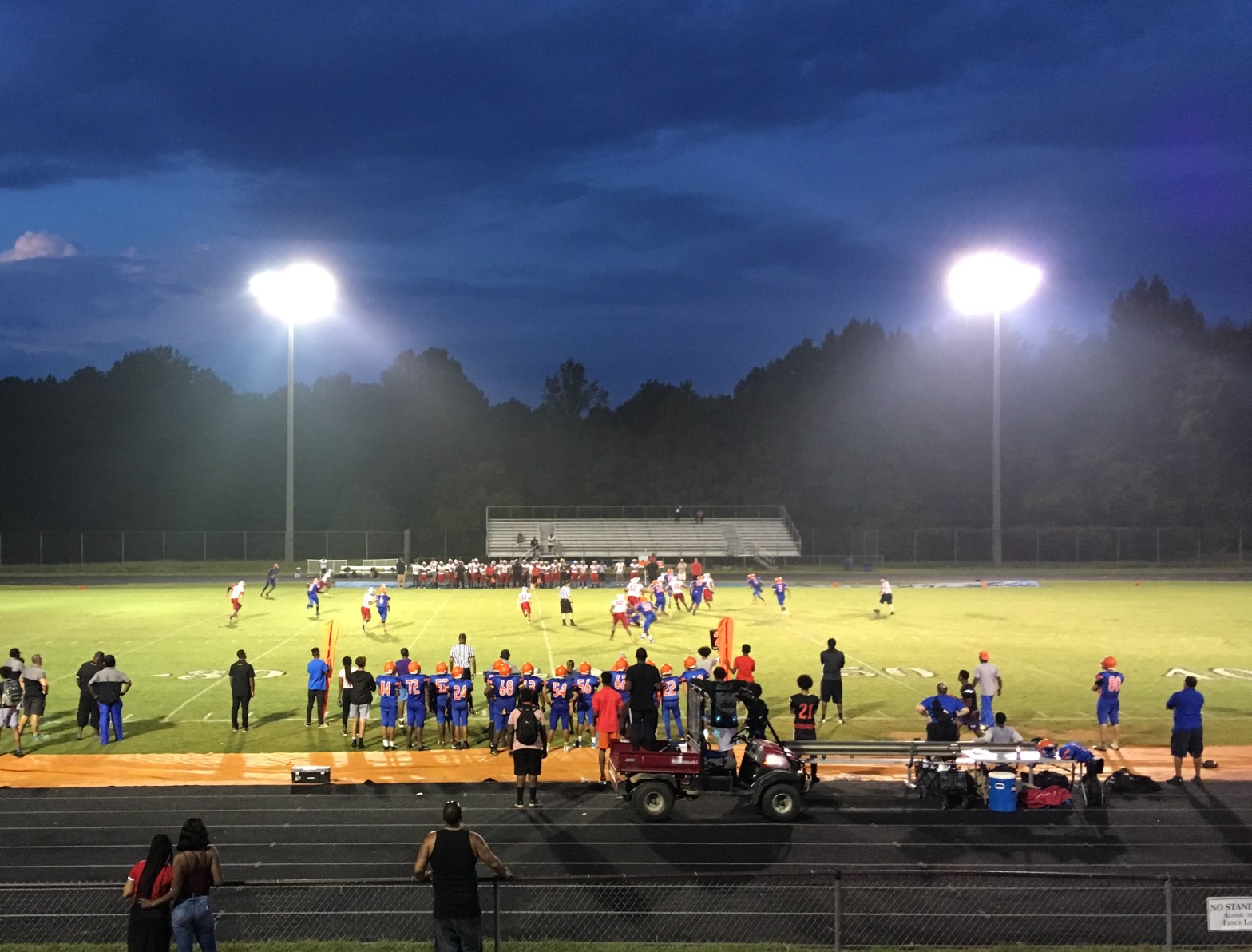
Our boys play different positions and are in different age groups, until next year when they will both be in high school. They are both leaders and daily push hard against their personal boundaries. Our oldest is regularly up against kids larger than himself; but, he chooses to be on the field, in the weight room, working hard to get bigger, better, faster, stronger. That drive will serve him well in life. The courage to go out there everyday, taking and incorporating direct feedback on needed improvements, is admirable and frankly lacking among many kids, and ultimately adults, in the workplace today. Our younger son, an introvert who is generally as content at rest as anything, ensures we leave early for football practice, uncharacteristically pointing to the clock as departure time approaches. At practice, he is in his element, whether laying down the play in the huddle or finishing out a sprint. In those moments, it is clear he is where he is meant to be.

Incidentally, over the years, I experienced my own sports injuries, often to the face and head. I took a field hockey ball to the nose (now youth wear goggles), an elbow to the head in basketball, and a field hockey stick to the head in the Final Four. One day at field hockey practice, while working on penalty corners, I took a shot to the leg so hard that tears streamed down my face as the pouring rain hid their presence. The contusion to my leg was so dramatic that the trainers had to mold a customized guard around the apple sized lump to protect it from further injury during several weeks of healing. There is risk in any sport and it is worth the rewards.

People sometimes directly ask “Aren’t you scared letting them play football?” Sure. I am anxious every time any of our three kids step onto an athletic field or court; but, so too is a dance mom or mother of a child doing any kind of performance or sport. That’s a mom thing, not a football thing. Most of us take calculated risks everyday. We get into cars without a second thought, despite statistics that show we are likely to be hurt or killed by or in a car at some time in our lives. People want to get where they are going, so they take the necessary and available precautions, utilizing education, safe equipment and proper technique, and they get in the car. Likewise, I want our boys to get where they are going in life, for however long that is. We apply the same principles because the lessons learned on the football field equipping them for their journey are undeniable.

I fully support the consideration underway to encourage kids to begin with flag football, to learn concepts, begin building their game IQ, and develop basic skills. This may be the future of youth football in America and facilitate consideration by many more families of a complex and unique sport, introducing it in a low contact way.

I was the least likely football mom. But, I ,too, am where I am meant to be. Supporting my boys in one of their greatest passions in life. If anything happened to either of them tomorrow, more likely off of the football field than on, I would take comfort in knowing we allowed him to fully live. To have courage, to take risks, to seek to be part of something bigger than himself, to push his boundaries and to inspire others. Grit can be found on the grid iron. And it translates to life skills that are critical to success and resilience. While many will continue to judge those of us who allow our kids to play football, we will stay focused on the long game. Raising hard working young men who look out for others and know how to take a hit and get back up for the next play in life.

Holly S. Stofa